Kittmaster.com
  • Kittmaster's K.I.T.T.
  • Tour (2004)
  • Images (2014)
  • Videos (1996)
  • Videos (2014)
  • Interactive Dash
  • Donor Build
  • Site Updates

Dashboard & Consoles

Details
Hits: 200

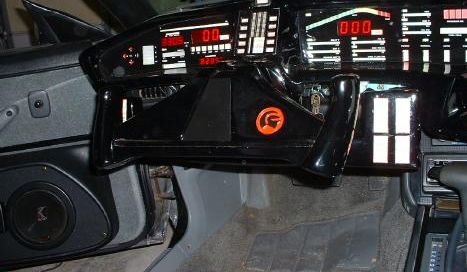
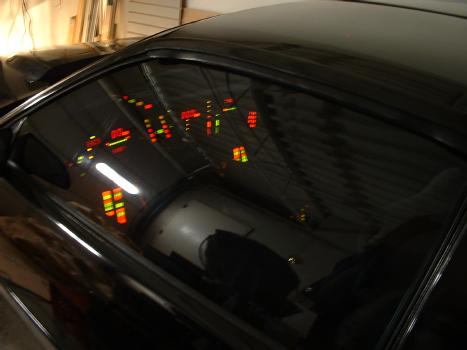
There is a rule in this build that applies to every surface, every switch, every display on this dashboard: everything does something. There are no dummy gauges. No static bar graphs pretending to be alive. No decorative LED arrangements frozen at a number someone thought looked good. The only elements that don't move are the ones that were never meant to move — the silkscreened labels, the MPH and RPM legends, the visual icons the show used as reference. Those are static because the show made them static. Everything else is live.

That wasn't the starting point. The original kit from Mark's Custom Kits shipped with displays that looked right but fed from nowhere — half-working approximations of the real thing. The decision was made early: pay three times the cost, go back to the engineering, and make every single display provide real-time active feedback from an actual source. Every instrument on this dash was collaborated on and re-engineered to do what it appears to do. What you see is what the car is actually telling you.

That's not a modification. That's a philosophy.

The Main Instrument Panel

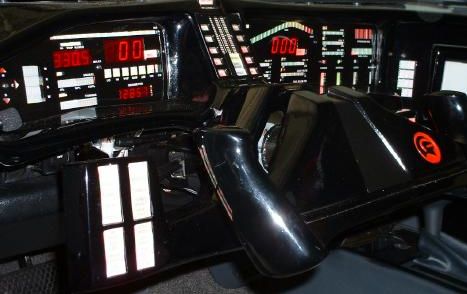
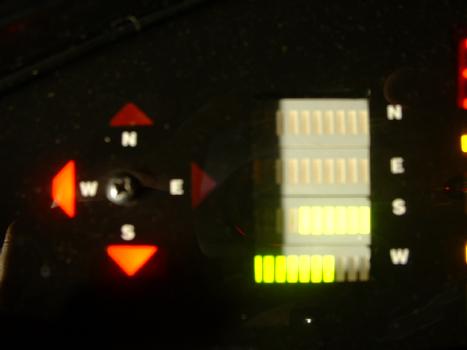
Working left to right across the primary display face, the first instrument is the compass — an analog gimbal unit with sine/cosine output buffered and fed into LM3914 LED drivers. The compass reads real heading, displayed in real time. No GPS lookup, no digital approximation. Analog signal, properly buffered, properly driven.

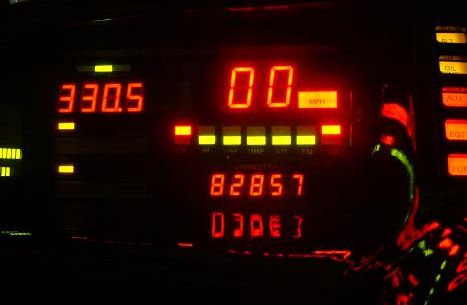
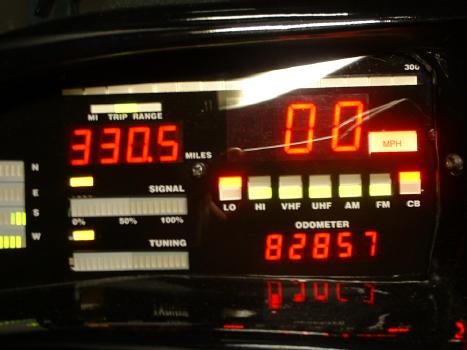
The speedometer pulls from the vehicle's stock speed sensor. The signal runs through a dedicated speed buffer box, then into a CA3161/CA3162 three-digit decoder driving both a numeric readout and LM3914 bar graph LEDs. The stock sensor does the work it was designed to do. The decoder makes it visible in KITT's language.

The odometer is a custom 8051 microprocessor build. The MPU counts ticks from the speedometer signal and accumulates mileage, writing it to an external EEPROM so the count survives power cycles. The 8051 drives a multi-digit display showing current mileage at all times. It's a dedicated computer doing one job — the same job the factory odometer does, built from scratch in hardware that fits the dash architecture.

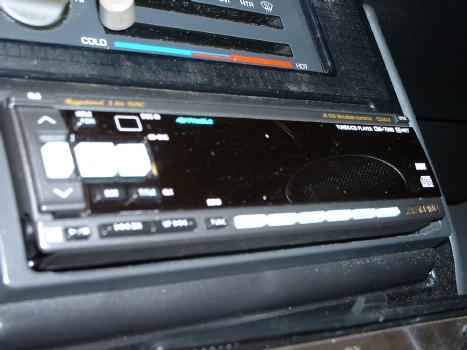
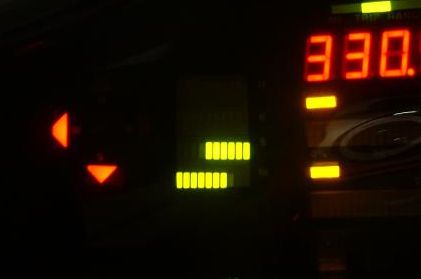
The signal and tuning bars — which in the show served as stylized graphic elements — are converted here into functional VU meters tied to the left and right audio output channels of the Alpine head unit. The bars move with the music. Level, balance, and dynamics are all visible in real time on a display that most replica builders leave frozen or faked.

The red and green toggle LEDs display live vehicle status: left turn, right turn, low beam, high beam, and check engine. Each one is wired to its actual signal source. They're not decorative. They're instruments.

On startup, the 5-step countdown sequence runs — stepping through system states as the car comes online, exactly as the show depicted. It's the boot sequence. The car announces that it's awake.

The voice modulator is wired directly to the alarm system's voice module. When the system speaks — arm, disarm, any programmed phrase — the modulator display tracks the waveform in real time. The bar graph moves with the voice the same way it moved when William Daniels spoke on screen. The effect works because the signal driving it is real audio, not a triggered animation.

The Normal / Auto / Pursuit mode display operates from live vehicle inputs, not button presses. Driving normally holds it in Normal. Put the throttle to the floor and it switches to Pursuit. Engage the cruise control and it moves to Auto. The show used this as a plot device. This build uses it as instrumentation. The logic runs on actual vehicle signals.

The tachometer takes its signal directly from the ignition coil tach feedback — the OEM signal the factory tach used, routed through the same CA3161/CA3162 decoder and LM3914 bar system as the speedometer. RPM displayed in digits and bars, sourced from the engine itself.

Secondary Information Bars

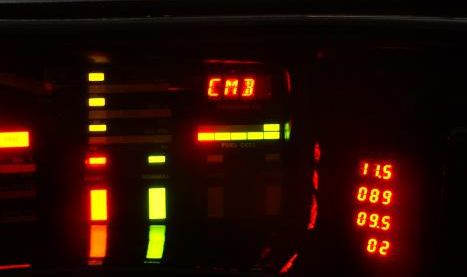
Below the main instrument line, six secondary bar displays monitor what the main gauges don't cover — the systems that matter when you're pushing the car or watching it age.

Fuel flow PSI shows live fuel pressure at the manifold rail. Aux volts monitors the output voltage of the Mass Engineering secondary alternator specifically — separate from the OEM charging system, because it has its own story to tell. Radar watts ties into the radar detection signal, displaying warning strength as a bar rather than a beep. Oil temp reads from a sensor installed in the oil pan drain plug — not an approximation, a direct measurement. Inlet temp measures the air temperature entering the TBI intake. EGT — exhaust gas temperature — monitors the exhaust stream, one of the earliest indicators of combustion problems before they become mechanical ones.

Six parameters. Six live sensors. Six bars that move because something real is moving them.

Five-Step System Bars

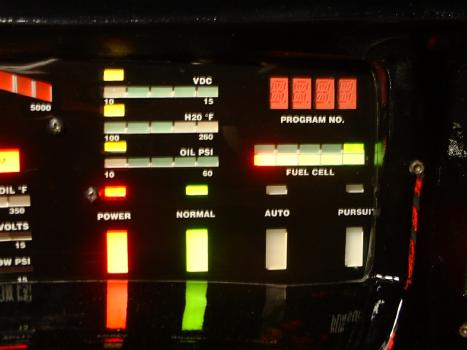
Four additional bar displays handle the core vehicle health metrics: main alternator voltage (OEM system), water temperature (OEM sensor), oil PSI, and fuel remaining. These are the fundamentals. They're here because a car this complex deserves more than a warning light when something goes wrong.

The Rest of the Console

The Program ID display uses 16-segment alphanumeric hardware driven by the dash MPU — the same decoder architecture as the Alpha unit documented in the Media Devices chapter, outputting text feedback from the system's microprocessor.

A second Normal / Auto / Pursuit panel uses touch-button inputs with LED confirmation. The LEDs respond. The buttons themselves don't drive the mode logic — that's handled by the vehicle signal inputs described above. This is a deliberate divergence from the show, where the buttons were the trigger. Here, the car decides. The buttons are acknowledgment, not command.

The telltale board displays numeric values corresponding to each of the five-step bar graphs — the same data in digits rather than bars, for precision reading when a bar approximation isn't enough.

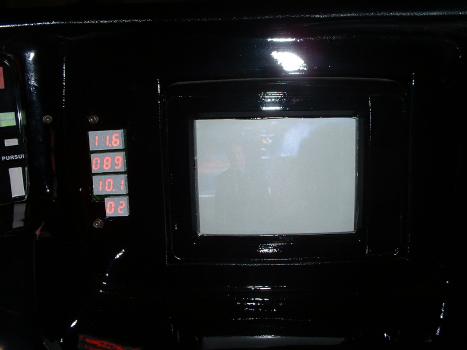
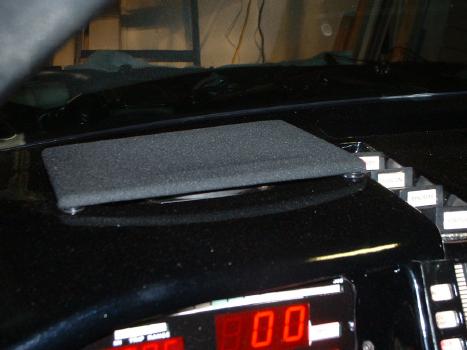
An 8-inch color monitor handles video output and graphics — fed by the JVC KV-V10 and the broader media system documented in the Media Devices chapter.

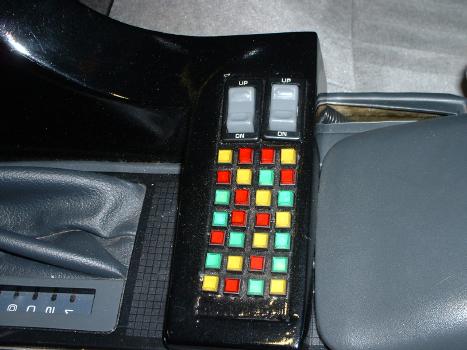
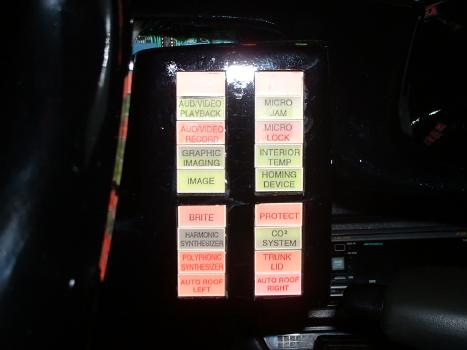
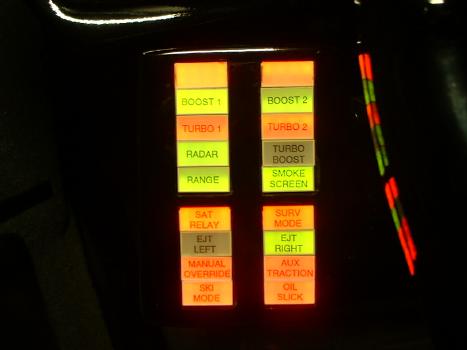
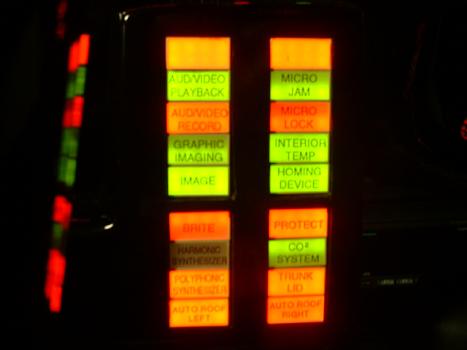
The switchpods provide LED status feedback for various systems. Like the touch buttons, they diverge from the show — the LEDs indicate, but the pods don't accept input. Another intentional departure: indicator, not control.

The armrest console is where the tactile controls live — the buttons that actually do things. Scan rate adjustment with numeric digit feedback for each display (fast and slow, shown in real time). Odometer reset. MPU reset. And dot/bar mode selection for each bar graph — switching any display between dot mode (single LED tracks the value) and bar mode (filled column up to the value). Every bar graph in the car can be toggled independently from here.

Dashboard and console components:

CompassAnalog gimbal — sine/cosine buffered, LM3914 LED drivers
SpeedometerStock speed sensor → speed buffer box → CA3161/CA3162 decoder + LM3914 bars
OdometerCustom 8051 MPU — speed tick accumulation, external EEPROM, multi-digit display
Signal / Tuning BarsVU meters — Alpine left/right audio channel output
Toggle LEDsLeft turn, right turn, low beam, high beam, check engine — live signals
Startup Sequence5-step system countdown on power-up
Voice ModulatorTied to alarm voice module — tracks live audio waveform
Mode DisplayNormal / Auto / Pursuit — vehicle signal driven (throttle, cruise control)
TachometerIgnition coil OEM signal → CA3161/CA3162 decoder + LM3914 bars
Fuel Flow PSILive manifold fuel rail pressure
Aux VoltsMass Engineering secondary alternator output voltage
Radar WattsRadar detection signal strength
Oil TempSensor in oil pan drain plug
Inlet TempTBI intake air temperature
EGTExhaust gas temperature
Main Alt VoltageOEM alternator — 5-step bar
Water TempOEM sensor — 5-step bar
Oil PSI5-step bar
Fuel Remaining5-step bar
Program ID16-segment alphanumeric — MPU feedback display
Mode Touch PanelNormal / Auto / Pursuit — LED confirmation, show divergence
Telltale BoardNumeric readout of 5-step bar values
Monitor8-inch color TV — video and graphics
SwitchpodsLED system status feedback — no input, show divergence
Armrest ConsoleScan rate control (numeric), odometer reset, MPU reset, dot/bar mode per display

The show gave KITT a dashboard that looked like the future. This build took that same dashboard and wired it to the present — every sensor, every decoder, every microprocessor doing exactly what the display above it claims. The aesthetic is 1982. The engineering is deliberate, custom, and alive.

Nothing here is pretending.

Interactive Dash

Details
Hits: 470

Every readout, every switch, every console KITT needs to think and drive. Tap a marker to see what it does.

K.I.T.T. dashboard

Donor Vehicle

Details
Hits: 450

Before the scanner swept, before the voice spoke, before the name — there was a car.

1G2FS23E9LL210708. That's the Vehicle Identification Number stamped into the driver's door jamb of a 1990 Pontiac Firebird that rolled off the General Motors assembly line in Van Nuys, California. Not a stripped base model — this one left the factory with options. WS6 performance suspension, the teardrop functional hood, and the 700R4 four-speed automatic with overdrive. Someone ordered this car with intention.

Van Nuys built F-bodies from the muscle car era straight through to 1992, when GM shuttered the plant for good. This car was near the end of that run — one of the last Firebirds to come off that line before the doors closed.

Factory specs as delivered:

VIN1G2FS23E9LL210708
Year1990
Make / ModelPontiac Firebird
Body2-door Hatchback
Engine5.0L V8 — 305 cubic inches
Fuel DeliveryThrottle Body Fuel Injection (TBI)
Transmission700R4 4-speed automatic with overdrive
SuspensionWS6 Performance Handling Package
HoodTeardrop (functional)
InteriorGrey cloth, stock
Rear SuspensionAir shocks
Assembly PlantVan Nuys, California
RestraintsManual belts, driver airbag

The original KITT was an '82 Trans Am. This car is eight years younger, a different trim level, a different moment in Pontiac history. What it shares is the bloodline — the same F-body platform, the same swept nose, the same fastback silhouette that NBC's prop department chose in 1982 because nothing else looked like it belonged in the future.

That's the car this started with. What it became is the rest of the story.

Kittmaster's Replica K.I.T.T.

Details
Hits: 31293

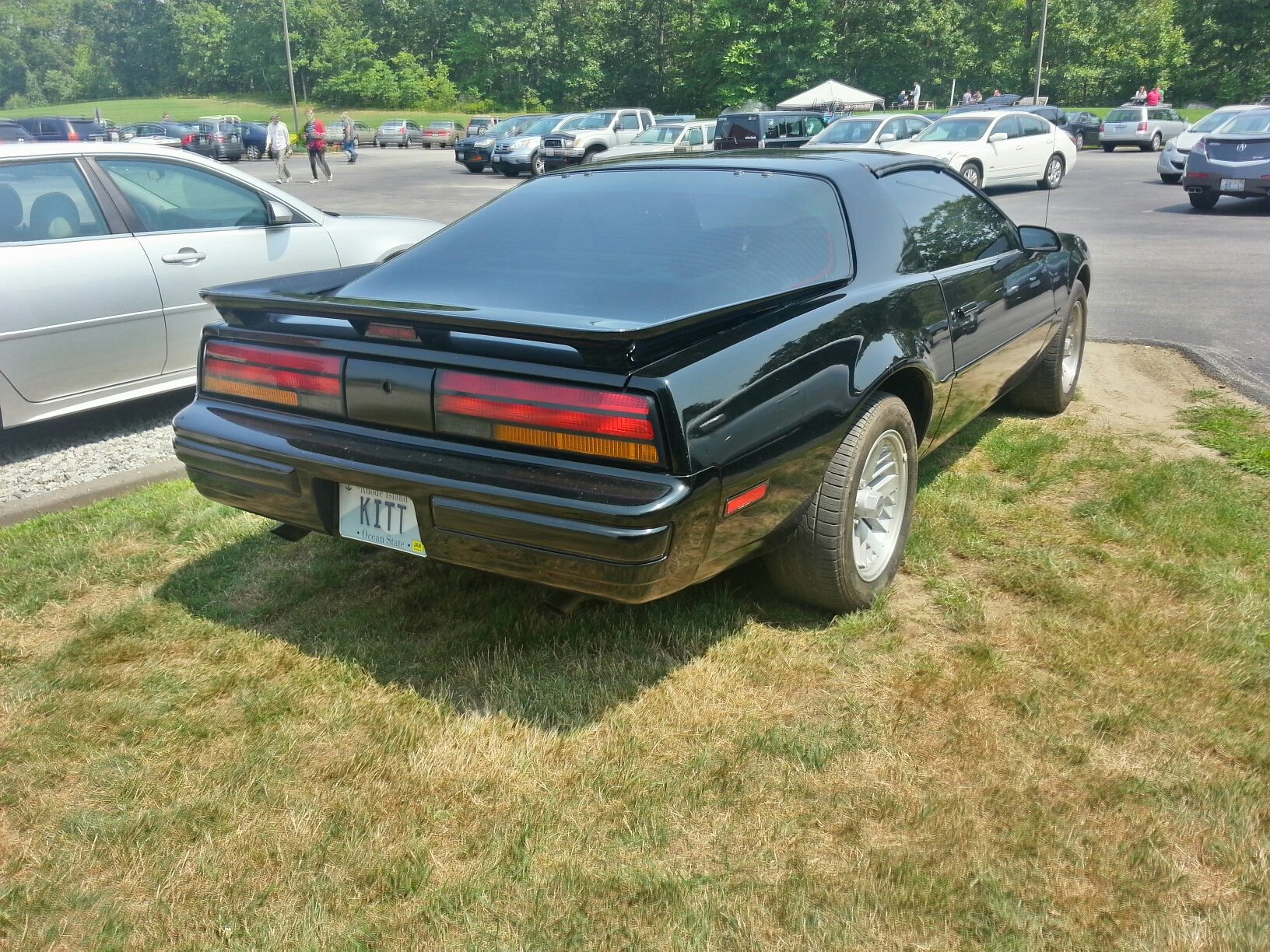
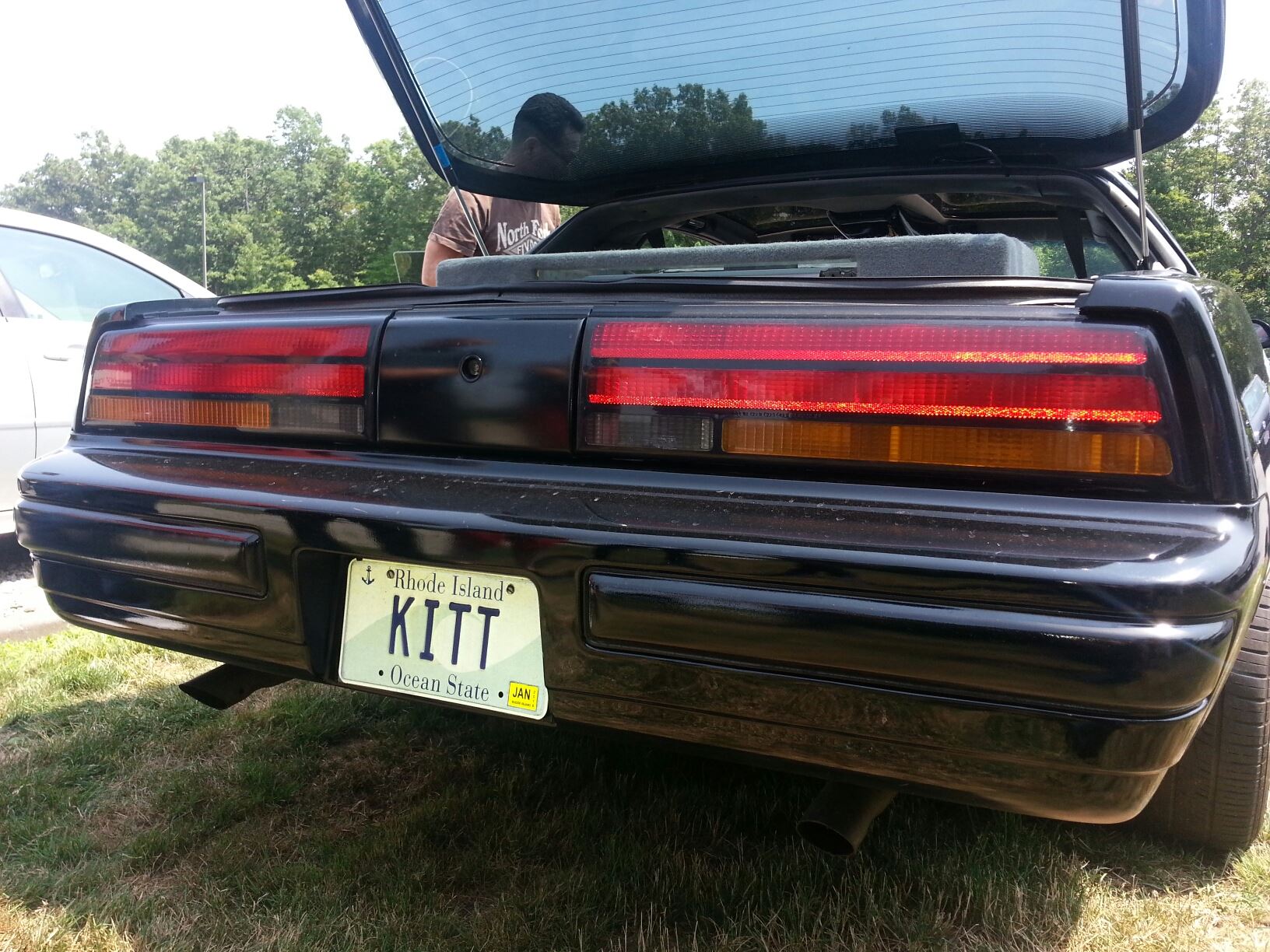
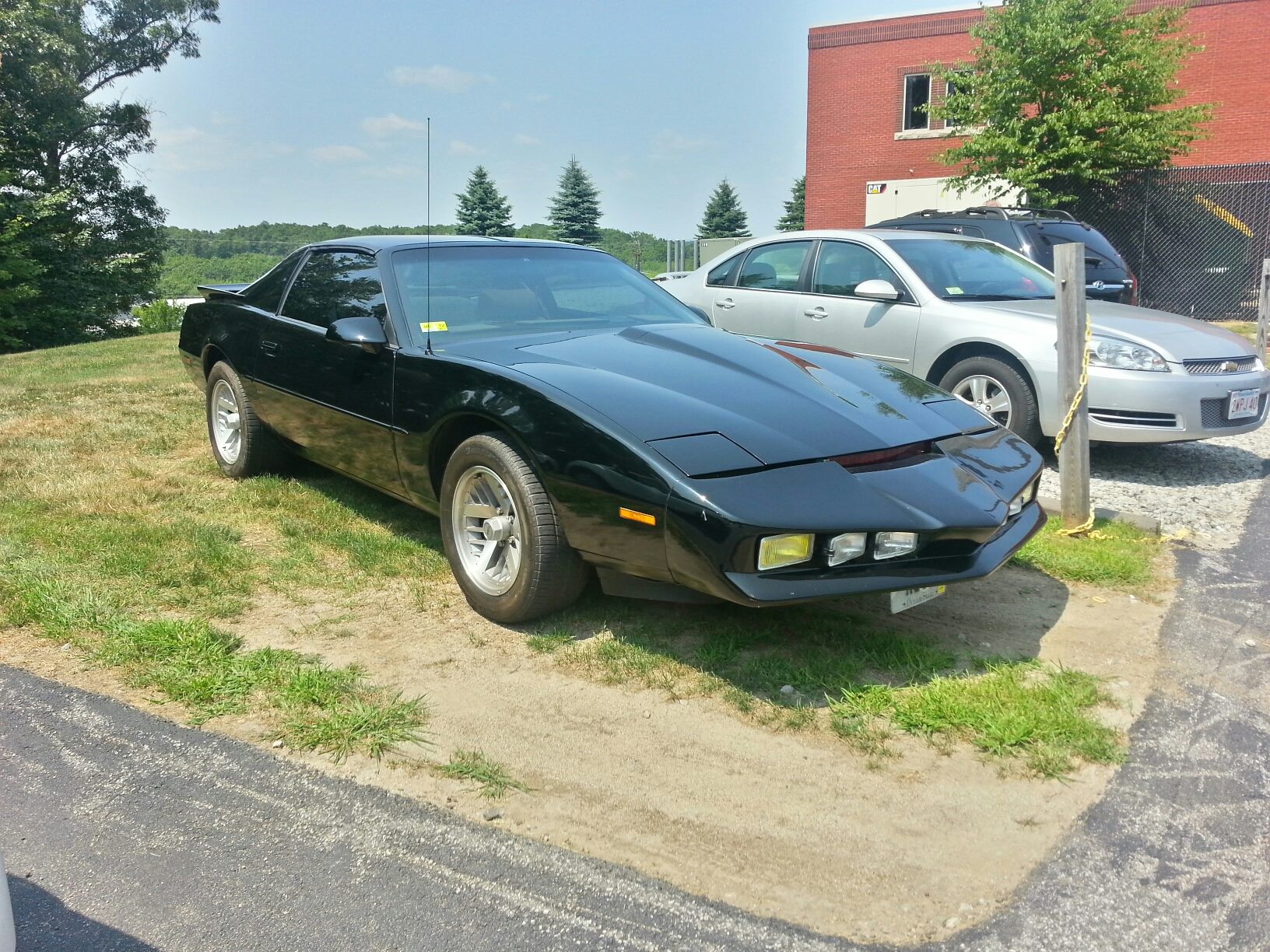
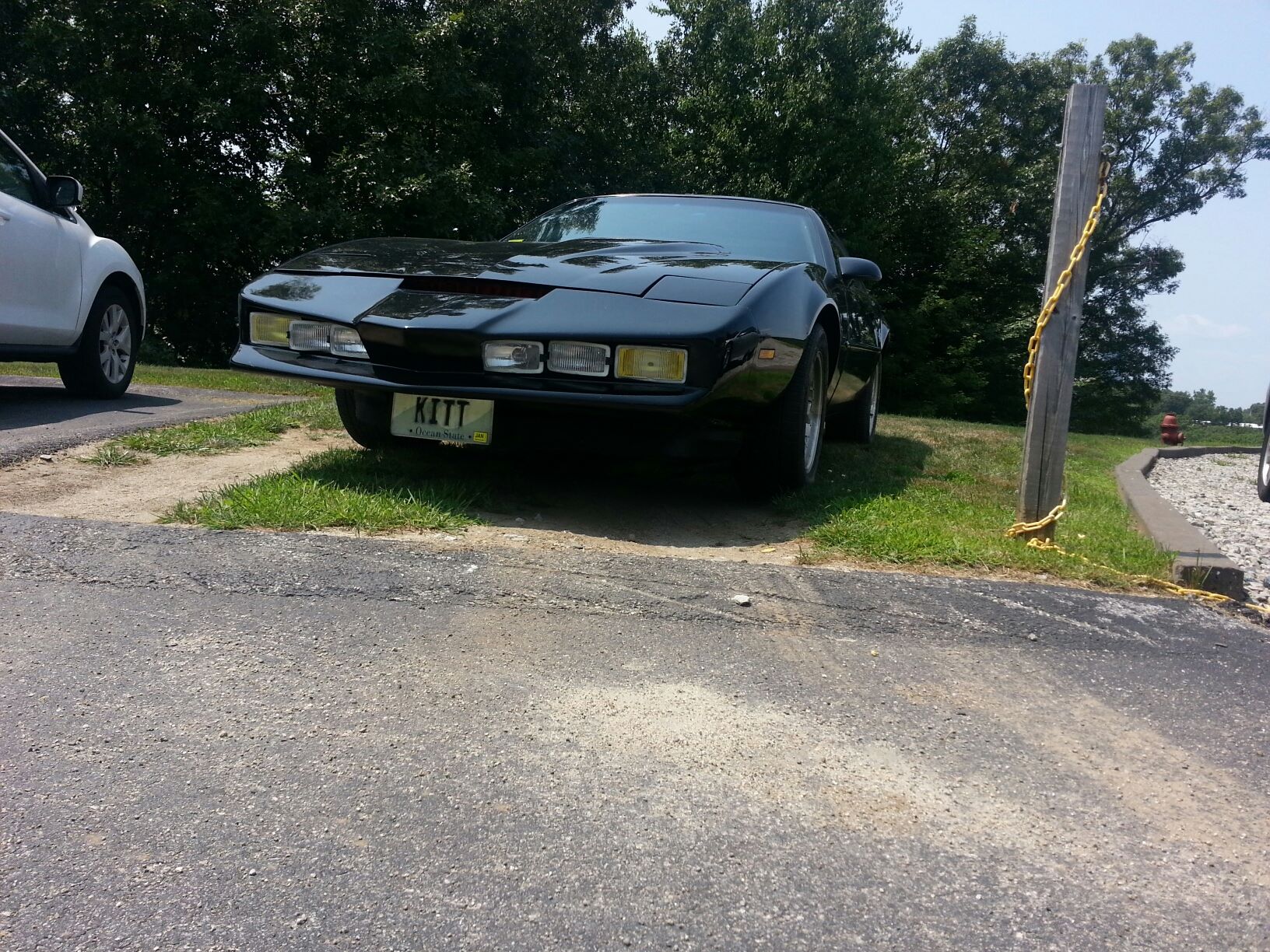
Welcome — and thanks for stopping by. This site is home to my fully-functional replica of K.I.T.T., the car a lot of us grew up wanting after watching Knight Rider. I keep it updated as time allows, smoothing out the navigation and adding to the galleries whenever I get the chance. Right now I'm working back through my archives to walk the build forward in order — from the earliest construction shots all the way to where the car sits today. The photo up top was taken in 2014, and honestly, the car still runs as great as it looks: a bit of a "time capsule" from when I wrapped up the build nearly 20 years ago.

The newest photos and videos live under the 2014 image and video links in the menu. I'm still hunting for more pictures from the build itself, though I may end up pulling stills from the footage I shot while recording the whole process. Truth be told, I'm not sure I ever took many good photos during the installation — it was a long time ago, back before every phone had a camera in it, and at the time I was just trying to get the thing built.

I'll keep adding history and backstory as time permits. For now, look around, enjoy the build, and thanks again for visiting.

Chris Bertrand
You can reach me anytime at chris@kittmaster.com
K.I.T.T. Interior Tour 2004

Details
Hits: 15503

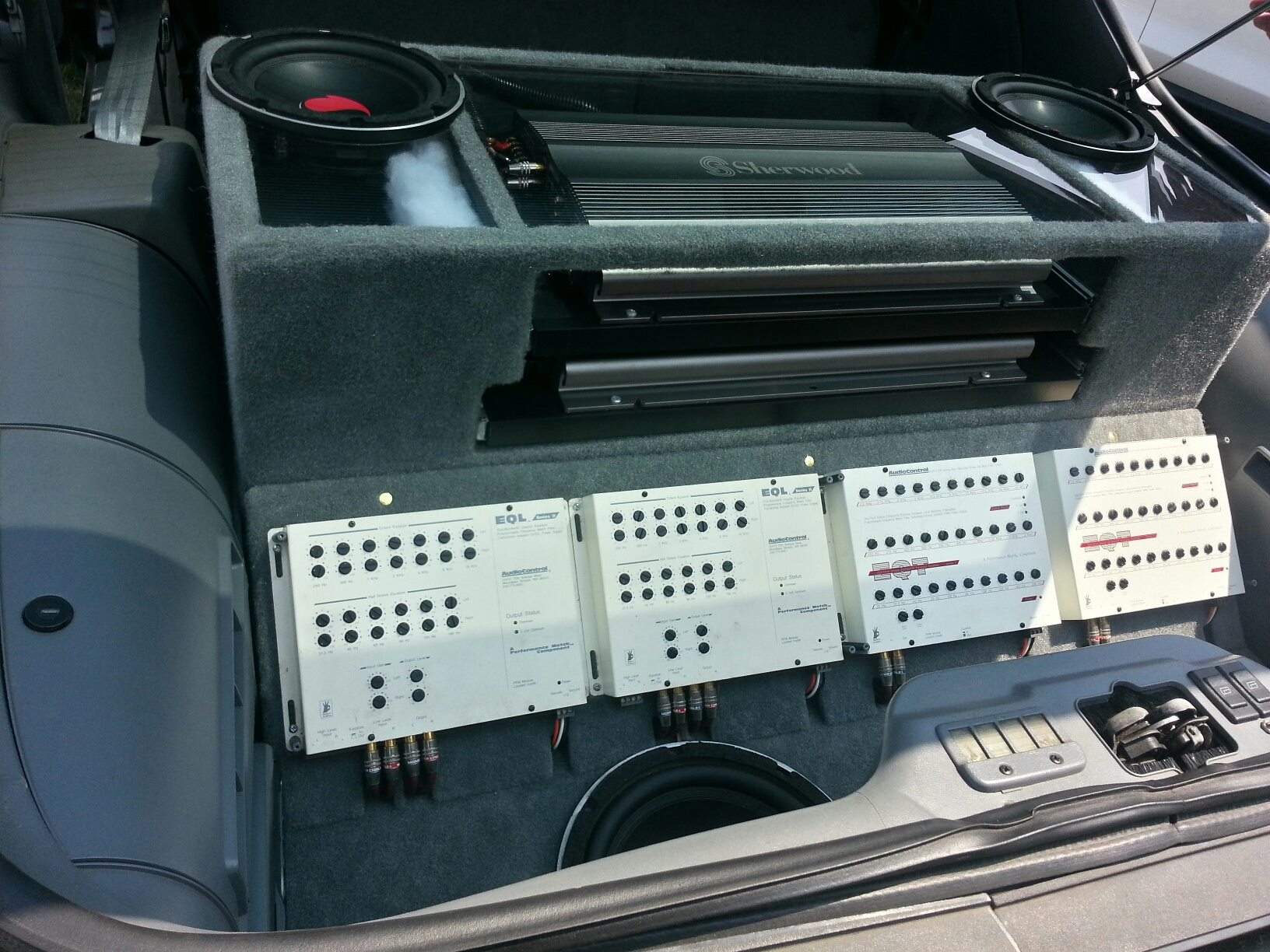
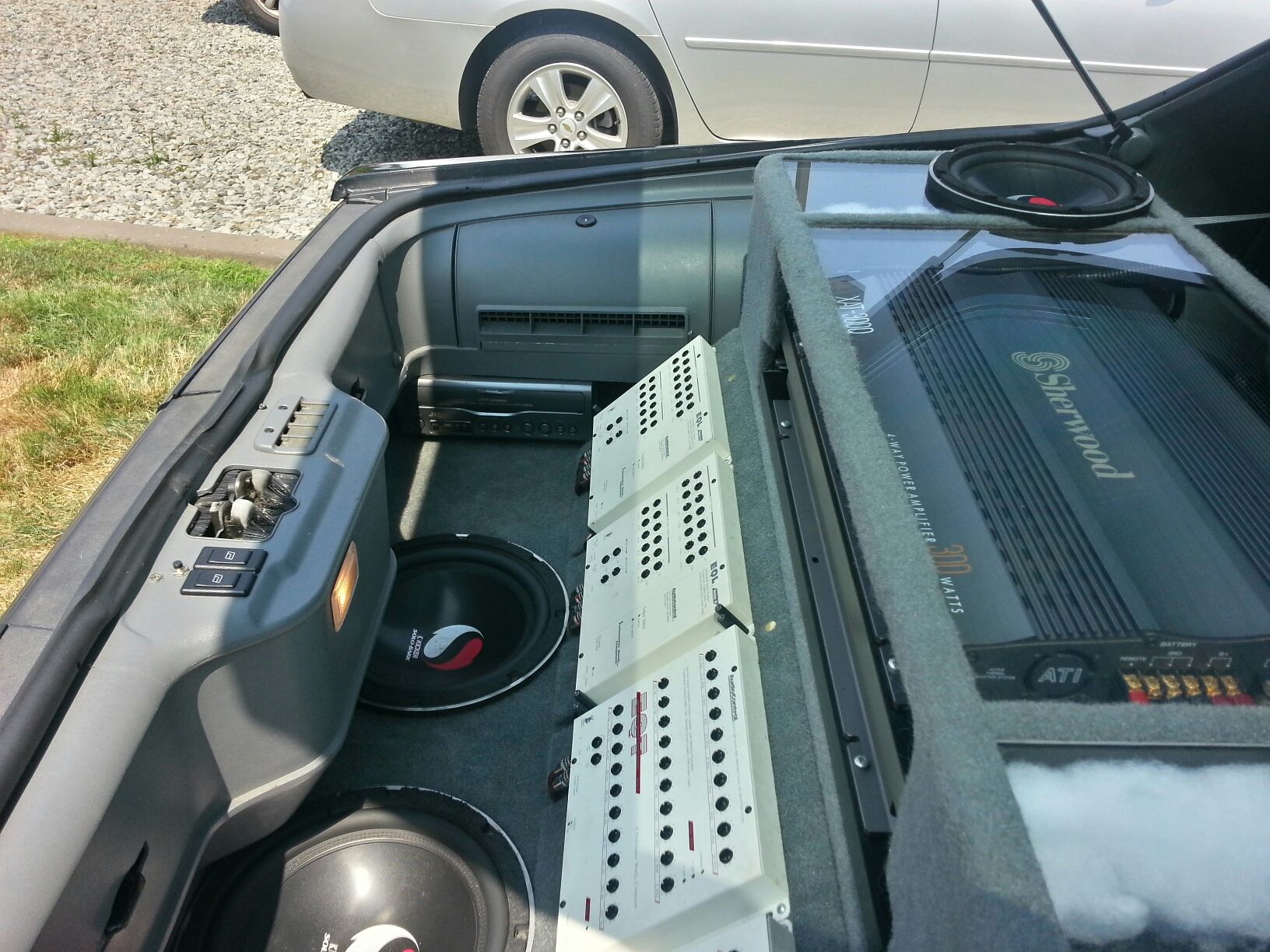
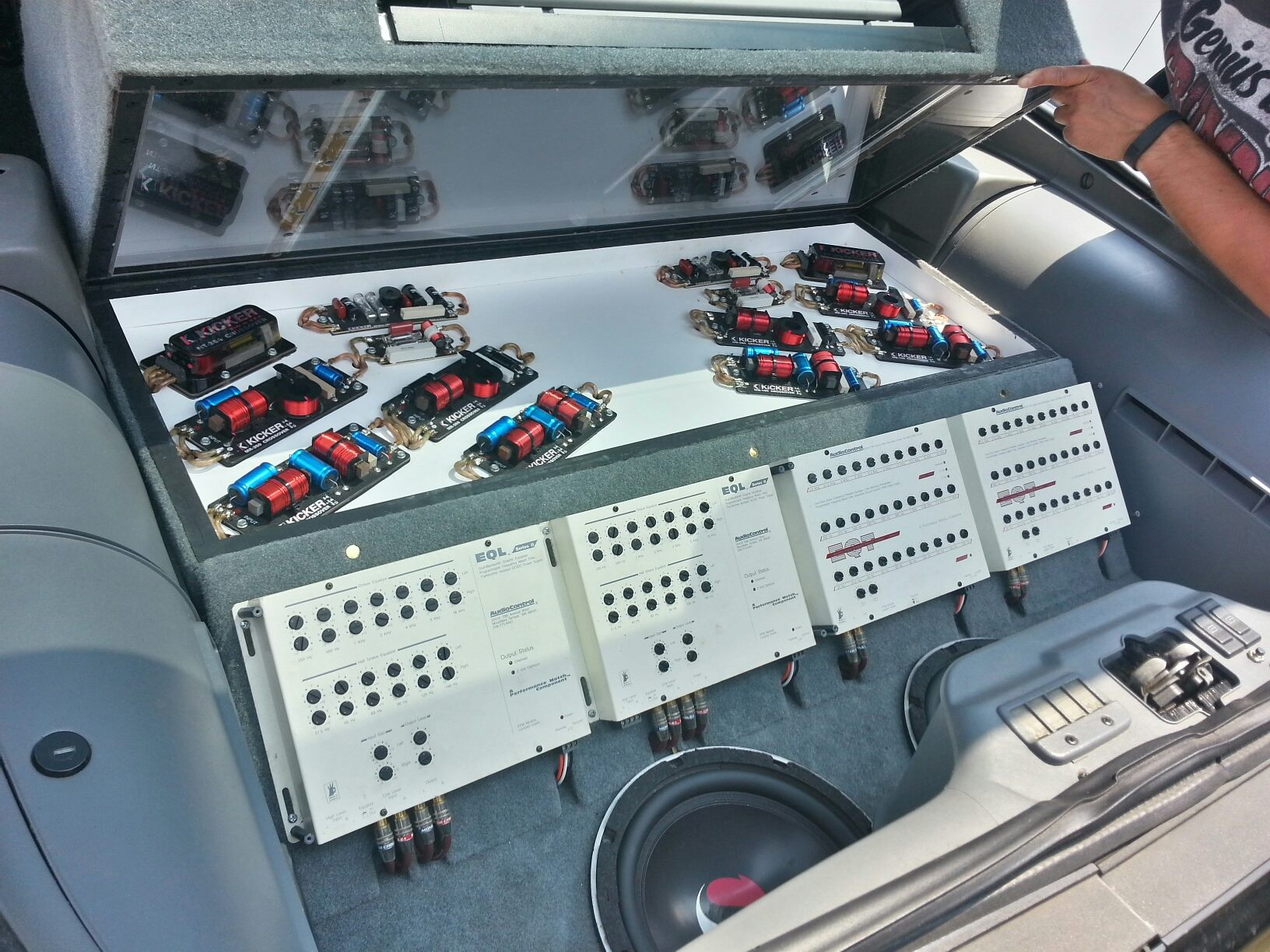
These images were taken around 2004, just after the interior of K.I.T.T. came together — the dashboard, the armrest console, the overhead console, the front nose, and all the scanner components and subsystems that make the car feel alive. What you're seeing here isn't quite the car as it sits today; back then, K.I.T.T. wasn't yet running the full sound system it carries now.

The original setup was built around a "removable" sound system — a deliberate choice to keep theft at bay. The serious gear, the amplifiers and subwoofers, was all portable, so I could pull it out and leave nothing behind but a baseline stereo to play music without lying awake worrying about somebody walking off with thousands of dollars of equipment. That system evolved into what it is today when my friend Joe Paquette introduced me to another genuinely ingenious guy, Thomas William Holmes III (passed 2011 — rest his soul). Tom took something that was already great and quietly built it into something awesome.
The final results are what you see in the gallery. A special thanks goes out to my family and friends, to Joe Paquette and his family, and to Thomas Holmes III and his family, for all the time, effort, and patience it took to get me across the goal line on K.I.T.T.. Everybody pitched in on the sound system's design and installation in one way or another — but I'll say this plainly: without these two, Tom and Joe, what you're looking at simply wouldn't exist.
The car remains in this same configuration today, and it'll most likely stay that way no matter what new technology comes along. Some projects you chase forever — this is one I was finally happy to call finished.

--= Two amazing friends whom I'll ever be grateful to know =--

Thomas William Holmes III

Joe Paquette


Gallery: KITT-Interior-Tour

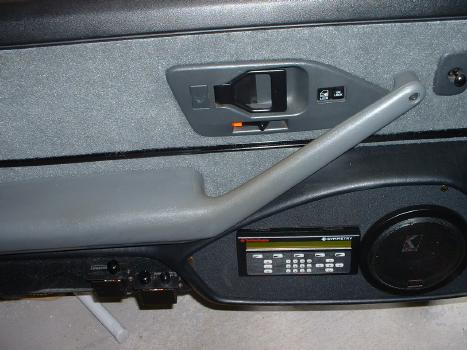
Drivers Door:  EPX 2, Epicenter, ESP-3 controls
Drivers Door: EPX 2, Epicenter, ESP-3 controlsAudio Control Epicenter and ESP-3 processor controls, EPX with DSP controller and 6.5" Kicker front door speaker. (1998)
Center channel speakers
Center channel speakersCenter audio channel and KITT Tach and Info displays. (1998)
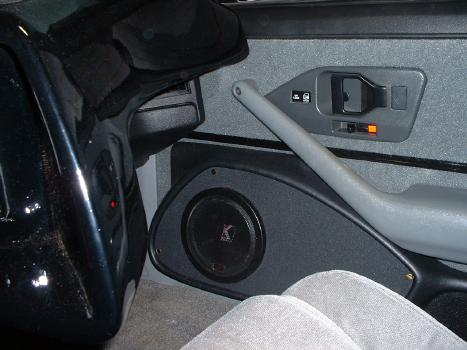
Passenger speaker
Passenger speakerPassenger door speaker using Kicker 6.5" driver. (1998)
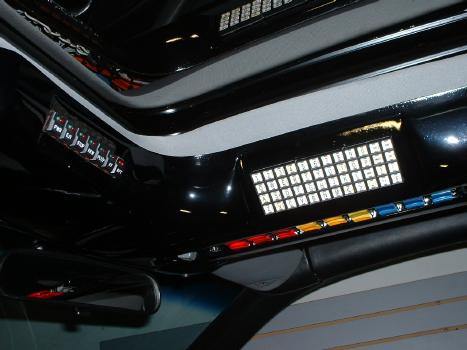
Overhead console from bottom view
Overhead console from bottom viewInverted view (bottom/up) of the over head console control buttons. QWERTY keyboard interface key matrix to drive messages on the dashboard. (1998)
Overhead console driver's view
Overhead console driver's viewVCR transport controls and overhead console overview. (1998)
Switchpod controls
Switchpod controlsKITT Interior tour circa 1998
Telltale interface left
Telltale interface leftKITT Interior tour circa 1998
Telltale interface right
Telltale interface rightKITT Interior tour circa 1998
Alpine AiNet stereo/CD/MP3 player
Alpine AiNet stereo/CD/MP3 playerKITT Interior tour circa 1998
Side profile view
Side profile viewKITT Interior tour circa 1998
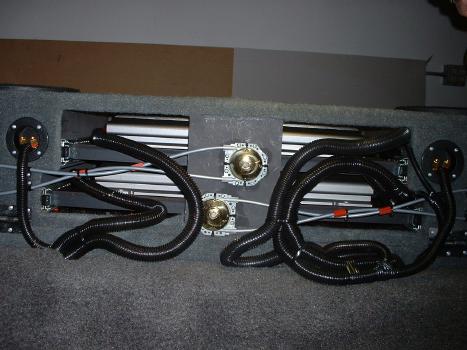
Rear amp motorized drivers
Rear amp motorized driversKITT Interior tour circa 1998
EPX 2 controller
EPX 2 controllerKITT Interior tour circa 1998
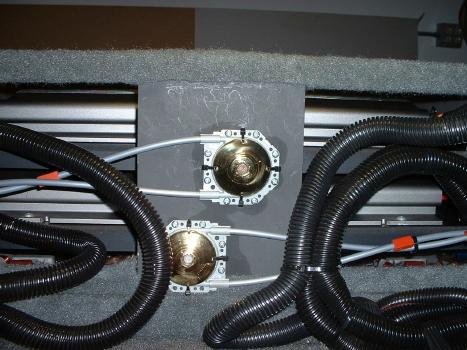
Rear amp worm gear drive interface
Rear amp worm gear drive interfaceKITT Interior tour circa 1998
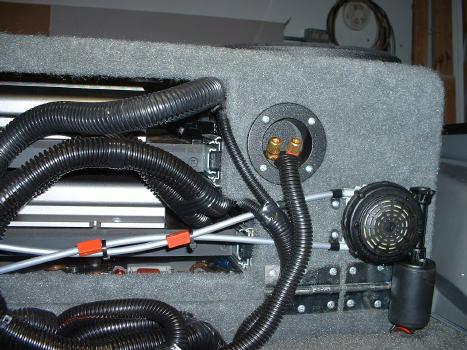
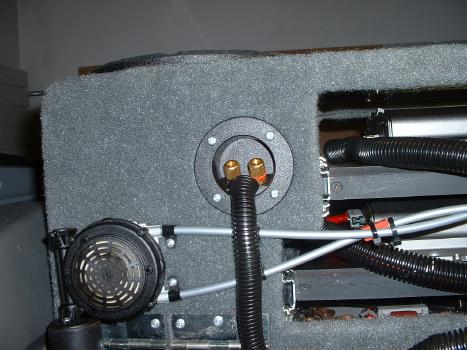
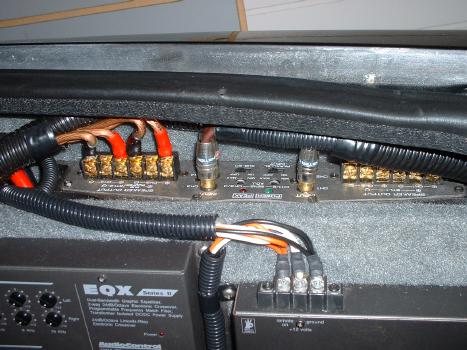
Speaker connection pod
Speaker connection podKITT Interior tour circa 1998
Motorized drawers drives
Motorized drawers drivesKITT Interior tour circa 1998
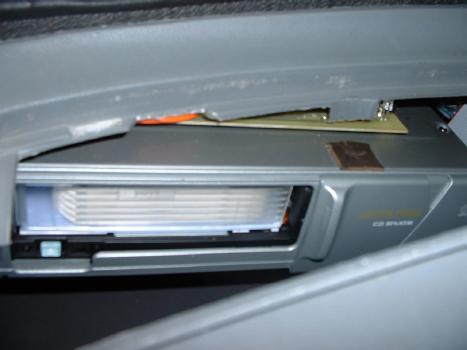
6 disc CD shuttle
6 disc CD shuttleKITT Interior tour circa 1998
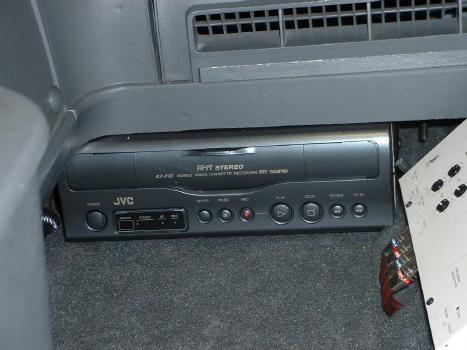
Converted 4 head VCR
Converted 4 head VCRKITT Interior tour circa 1998
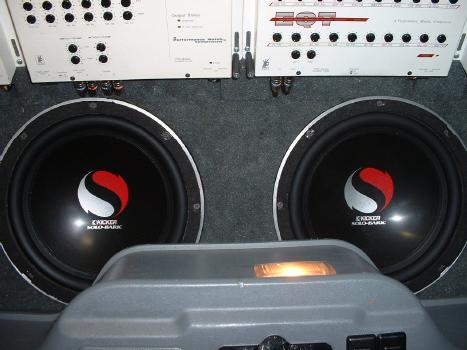
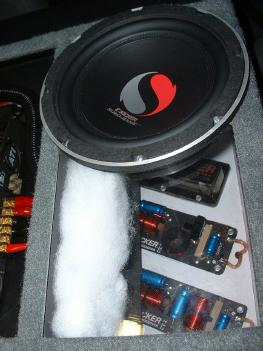
dual Isobaric 10" subwoofers
dual Isobaric 10" subwoofersKITT Interior tour circa 1998
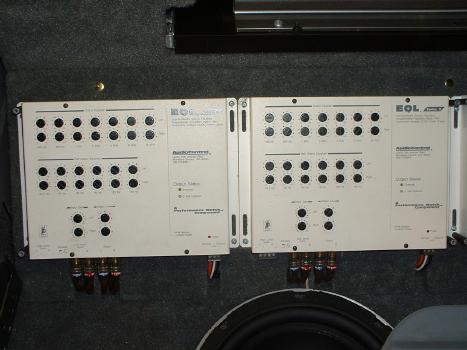
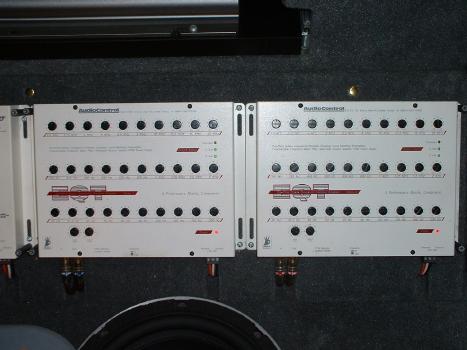
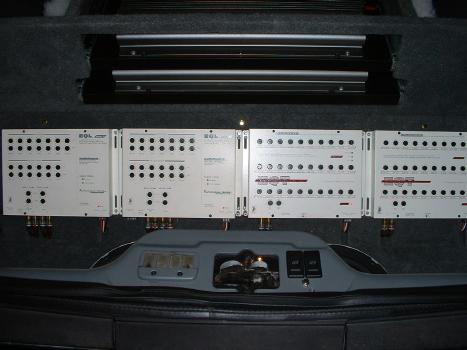
Left EQL EQ Linedrivers
Left EQL EQ LinedriversKITT Interior tour circa 1998
Front EQT EQ Linedrivers
Front EQT EQ LinedriversKITT Interior tour circa 1998
Full EQ's viewpoint
Full EQ's viewpointKITT Interior tour circa 1998
Drivers view
Drivers viewKITT Interior tour circa 1998
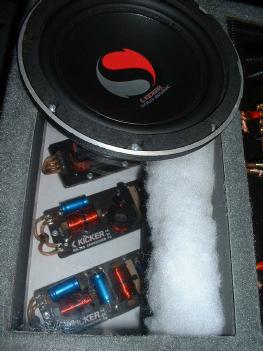
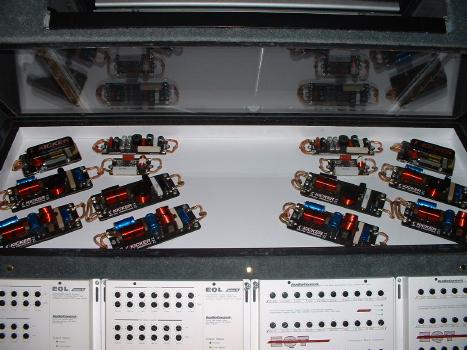
See through passive crossovers left side
See through passive crossovers left sideKITT Interior tour circa 1998
See through passive crossovers right side
See through passive crossovers right sideKITT Interior tour circa 1998
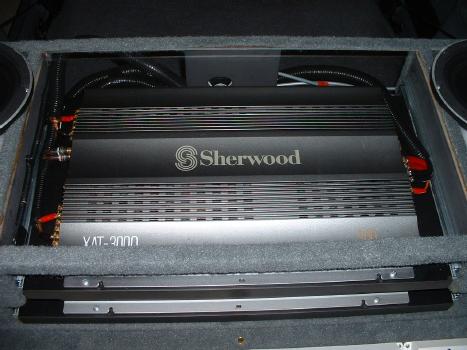
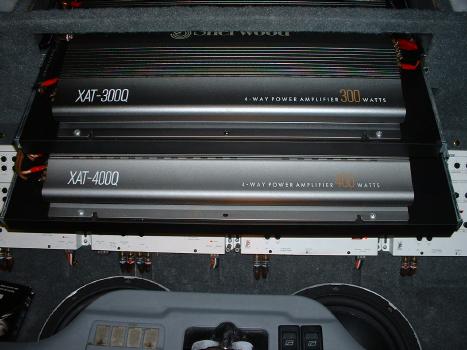
2 of 3 main power amps
2 of 3 main power ampsKITT Interior tour circa 1998
Amps closed drawers
Amps closed drawersKITT Interior tour circa 1998
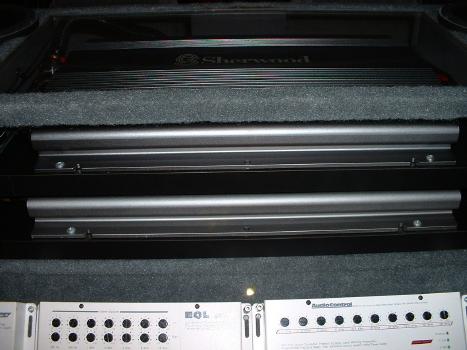
Amps draws extended
Amps draws extendedKITT Interior tour circa 1998
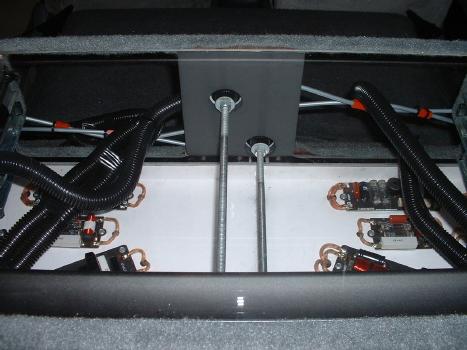
Drive components exposed
Drive components exposedKITT Interior tour circa 1998
Electronic motor tiering
Electronic motor tieringKITT Interior tour circa 1998
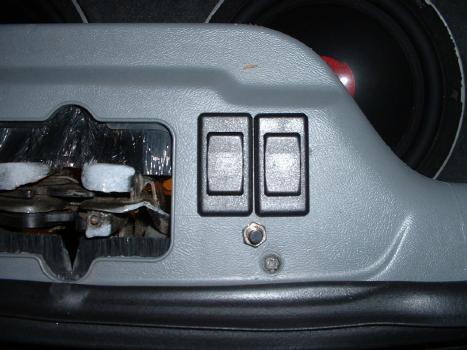
Manual motor controls day
Manual motor controls dayKITT Interior tour circa 1998
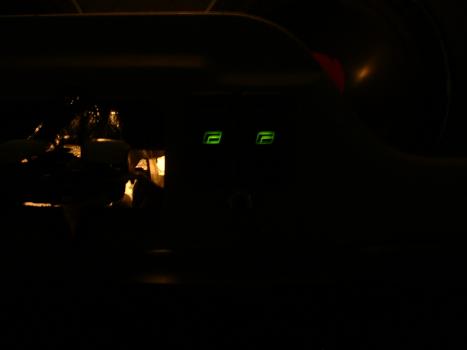
Manual motor controls night
Manual motor controls nightKITT Interior tour circa 1998
Amp rack opens to access crossovers
Amp rack opens to access crossoversKITT Interior tour circa 1998
Full electronic compass 1
Full electronic compass 1KITT Interior tour circa 1998
Power interfacing
Power interfacingKITT Interior tour circa 1998
Center channel and EQ
Center channel and EQKITT Interior tour circa 1998
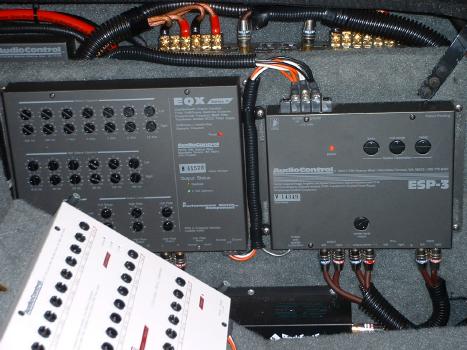
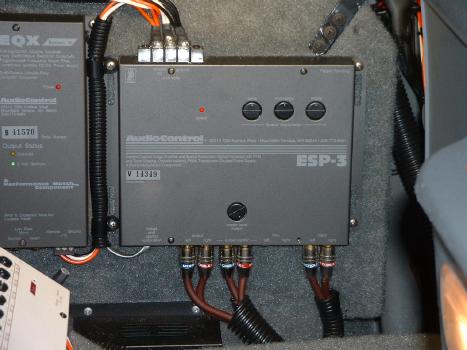
ESP-3 Center channel creator
ESP-3 Center channel creatorKITT Interior tour circa 1998
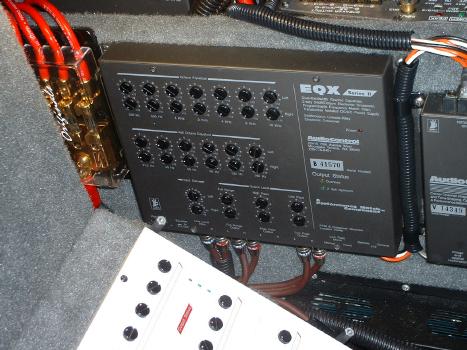
EQX EQ/Linedriver
EQX EQ/LinedriverKITT Interior tour circa 1998
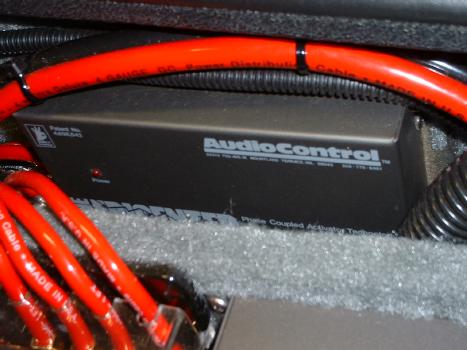
Epicenter bass restoration module
Epicenter bass restoration moduleKITT Interior tour circa 1998
1 of 3 amps
1 of 3 ampsKITT Interior tour circa 1998
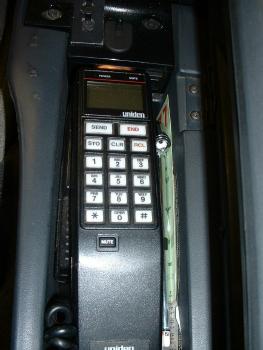
Analog phone
Analog phoneKITT Interior tour circa 1998
Full electronic compass 2
Full electronic compass 2KITT Interior tour circa 1998
Telltale interface
Telltale interfaceKITT Interior tour circa 1998
Driver view steering wheel
Driver view steering wheelKITT Interior tour circa 1998
Color SD CRT TV
Color SD CRT TVKITT Interior tour circa 1998
Drivers cockpit overview
Drivers cockpit overviewKITT Interior tour circa 1998
Chris Bertrand / Owner
Chris Bertrand / OwnerKITT Interior tour circa 1998
16 segment alpha drivers
16 segment alpha driversKITT Interior tour circa 1998
Speed/Trip/Odometer/signaling
Speed/Trip/Odometer/signalingKITT Interior tour circa 1998
Compass and trip odometer
Compass and trip odometerKITT Interior tour circa 1998
Outside driver view
Outside driver viewKITT Interior tour circa 1998
Signal tuning indicators
Signal tuning indicatorsKITT Interior tour circa 1998
Voice box and step sequencer
Voice box and step sequencerKITT Interior tour circa 1998
Fuel/Water/Volts/Oil and indicators
Fuel/Water/Volts/Oil and indicatorsKITT Interior tour circa 1998
Left full range speaker
Left full range speakerKITT Interior tour circa 1998

  1. K.I.T.T. Image Gallery 2014
  2. K.I.T.T. Construction Videos 1996
  3. K.I.T.T. Video Gallery 2014
  4. Site Updates
Copyright © 2026 Kittmaster.com. All Rights Reserved.